


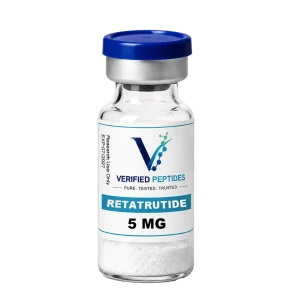
Retatrutide

Price range: $50.00 through $260.00
Retatrutide peptide (LY3437943) is the most potent weight loss compound in clinical development — a triple agonist targeting GLP-1, GIP, and glucagon receptors, showing up to 28.7% body weight loss in 68-week trials. Here’s everything researchers need to know: mechanism, clinical data, dosing protocols, and sourcing.
If you’ve been following the GLP-1 space, you already know how wild the last few years have been. Semaglutide felt like a revolution. Then tirzepatide came along and raised the bar. Now retatrutide peptide — the first true triple agonist in clinical development — is sitting in late-stage trials, and the clinical data is genuinely hard to ignore.
Twenty-eight point seven percent average body weight loss over 68 weeks at the highest dose. To put that in context: that’s roughly double what Ozempic produces. It’s not a marginal improvement — it’s a different category entirely.
This guide covers everything you need to know about retatrutide: what it is, how this triple agonist works at the receptor level, what the clinical trials actually showed (including data most articles miss), how it compares to semaglutide and tirzepatide, and what the dosing protocols look like based on Phase 2 research. We’ll also cover side effects honestly, who it’s best suited for, and how researchers are currently sourcing it.
What Is Retatrutide?
Retatrutide peptide — also known by its development code LY3437943 — is a synthetic 39-amino acid peptide developed by Eli Lilly. It was engineered from a GIP peptide backbone with several non-coded residues added (Aib at positions 2 and 20, alpha-methyl leucine at position 13) plus a C20 fatty diacid side chain that extends its half-life by allowing albumin binding. Basically: Lilly built something that could hit three different receptors at once and stay active long enough to be dosed weekly.
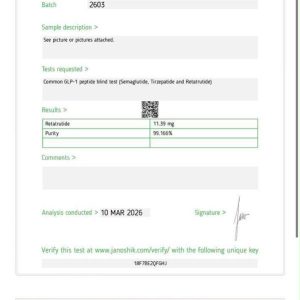
The molecular weight is 4,731.33 Da, and its CAS number is 2381089-83-2 for researchers looking it up in databases. In HPLC-purity testing, pharmaceutical-grade retatrutide comes in at 99.4%+ purity.
What makes retatrutide genuinely different from every GLP-1 drug before it is the triple receptor mechanism. Semaglutide hits one receptor (GLP-1R). Tirzepatide hits two (GLP-1R and GIPR). Retatrutide hits all three — GLP-1R, GIPR, and the glucagon receptor (GCGR). That third receptor is where things get really interesting, because glucagon doesn’t just affect appetite. It directly drives energy expenditure and fat oxidation in the liver. More on that below.
Lilly moved retatrutide from discovery to clinical proof-of-concept rapidly — the landmark preclinical paper by Coskun et al. was published in Cell Metabolism in September 2022, and Phase 2 human data appeared in the New England Journal of Medicine less than a year later. That’s fast for a molecule this structurally complex.
How Retatrutide Works: The Triple Mechanism
Understanding what retatrutide actually does at the receptor level matters a lot here — because the glucagon agonism is the piece most articles gloss over, and it’s arguably what separates retatrutide peptide from everything else in the pipeline.
GLP-1 Receptor Agonism
GLP-1 (glucagon-like peptide-1) receptor agonism is the foundation. It’s what every drug in this class — from Ozempic to Victoza to Mounjaro — does. When activated, GLP-1R slows gastric emptying (you feel full longer), reduces appetite by signaling the hypothalamus, and improves insulin secretion in a glucose-dependent manner. The result: you eat less, blood sugar stabilizes, and you lose weight. Retatrutide hits GLP-1R with high potency, providing a strong appetite-suppression and glycemic-control base.
GIP Receptor Agonism
GIP (glucose-dependent insulinotropic polypeptide) receptor agonism is the second layer — the same one tirzepatide added over semaglutide. GIPR activation amplifies insulin response, reduces nausea at higher doses (which is counterintuitive but well-documented), and appears to enhance the metabolic effects of GLP-1R agonism synergistically. Tirzepatide’s impressive results were largely attributed to adding GIPR on top of GLP-1R. Retatrutide includes this dual action as its baseline.
Glucagon Receptor Agonism — The Differentiator
Here’s where the triple agonist mechanism of retatrutide gets genuinely novel. The glucagon receptor (GCGR) normally drives the liver to release stored glucose and burn fat for energy. That sounds counterproductive for weight loss at first — glucagon is often framed as the “anti-insulin” hormone. But at the doses used in metabolic research, GCGR agonism does something valuable: it increases resting energy expenditure and drives hepatic fat oxidation directly.
In plain terms: glucagon activation tells your liver to burn fat. Combined with GLP-1’s appetite reduction and GIP’s metabolic synergy, the triple agonist approach simultaneously reduces how much you eat AND increases how much energy your body burns at rest. That’s a two-front attack on body fat that single-agonist drugs simply can’t replicate.
There’s also early evidence that GCGR agonism has specific benefits for liver fat (MASLD/NAFLD) that go beyond what GLP-1 alone achieves — the 2024 Nature Medicine study by Sanyal et al. showed significant liver fat reduction in a Phase 2a trial of retatrutide in patients with metabolic dysfunction-associated steatotic liver disease.
Appetite Suppression (GLP-1R)
Signals the hypothalamus to reduce hunger, slows gastric emptying so you stay full longer — the same mechanism behind Ozempic and Wegovy.
Insulin Amplification (GIPR)
Enhances glucose-dependent insulin secretion and synergizes with GLP-1R to improve metabolic outcomes — the dual-agonist layer tirzepatide added.
Fat Burning (GCGR)
Drives direct hepatic fat oxidation and increases resting energy expenditure — the third layer no other approved drug in this class has.
Cardiometabolic Effects
Reduces triglycerides, blood pressure, and visceral fat — with cardiovascular outcome trial data still pending but early signals promising.
Retatrutide vs Semaglutide vs Tirzepatide
The honest comparison here is stark. Retatrutide peptide’s triple agonist design isn’t marginally better than what came before — it’s in a different tier by the numbers. That said, all three are different compounds with different approval statuses, side effect profiles, and use cases.
A few things worth noting about this comparison. The weight loss percentages aren’t directly comparable because the trials used different populations, durations, and endpoints. But the trend is clear: each additional receptor target correlates with meaningfully higher weight loss.
Semaglutide’s 12–15% average is still impressive — it changed the obesity treatment landscape. Tirzepatide pushed that to ~20%. Retatrutide appears to push it further again, with the Phase 2 highest-dose group hitting 24.2% at 48 weeks and 28.7% at 68 weeks according to more recent follow-up data.
The tradeoff with retatrutide peptide is the side effect profile — it’s broadly similar to the other GLP-1 drugs but slightly more pronounced at higher doses, likely because of the glucagon agonism adding to GI effects. And of course, it’s not FDA-approved yet, so you’re working with Phase 2/3 trial data rather than post-market real-world evidence.
Clinical Trial Results: What the Data Actually Shows
The Phase 2 trial published in the New England Journal of Medicine (Jastreboff et al., 2023) is the landmark study. It enrolled 338 participants with obesity (BMI ≥30) or overweight with weight-related complications, randomizing them across multiple dose groups over 48 weeks. The results were striking enough that the paper got significant media attention.
Phase 2 NEJM Trial Highlights
- At the highest dose (12mg/week), mean weight loss was 24.2% of body weight at 48 weeks
- The 8mg group achieved 22.8% average weight loss
- Placebo group lost ~2.1% — confirming the drug effect is real and large
- Weight loss was still progressing at week 48 in higher-dose groups (hadn’t plateaued)
- Significant reductions in waist circumference, blood pressure, triglycerides, and HbA1c across dose groups
- At 4 weeks into treatment, the 4mg+ groups had already lost ~5% body weight
68-Week Follow-Up Data
More recent findings (reported after the original NEJM publication) extended follow-up data showing the highest-dose group reached 28.7% average body weight loss at 68 weeks. This is meaningful because it suggests retatrutide’s weight loss trajectory is longer and steeper than tirzepatide’s — which tends to plateau around 52–72 weeks. The curve hadn’t flattened out by week 68 in the highest-dose cohort.
MASLD/Liver Fat Study
A separate Phase 2a trial published in Nature Medicine (Sanyal et al., 2024) looked specifically at retatrutide in patients with metabolic dysfunction-associated steatotic liver disease (MASLD). The results showed significant liver fat reduction, with some patients achieving resolution of MASLD criteria entirely. This is a field where GLP-1 drugs have already shown benefit, but the glucagon receptor component in retatrutide appears to provide additional hepatic fat-burning that exceeds what GLP-1R agonism alone achieves.
Phase 3 TRIUMPH Trials
The Phase 3 program (TRIUMPH series) is ongoing. FDA approval was anticipated by mid-2026, though exact timing depends on the trial readout schedule. Lilly has not publicly confirmed an NDA submission date as of early 2026, but industry analysts are watching the TRIUMPH data closely. If Phase 3 confirms Phase 2 outcomes — which is the general expectation given the robust signal — retatrutide could reach market by late 2026 or early 2027.
| Specification | 5mg*10vials, 10mg*10vials, 15mg*10vials, 20mg*10vials, 30mg*10vials, 50mg* 10vials, 60mg* 10vials |
|---|
Be the first to review “Retatrutide”
Related products
Szjpbiotech

Szjpbiotech
Szjpbiotech
Szjpbiotech
Szjpbiotech

Szjpbiotech
Szjpbiotech

Szjpbiotech
Reviews
There are no reviews yet.