


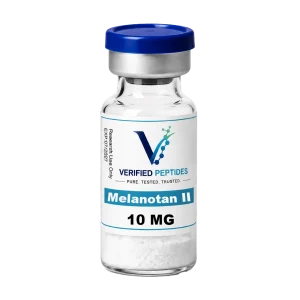
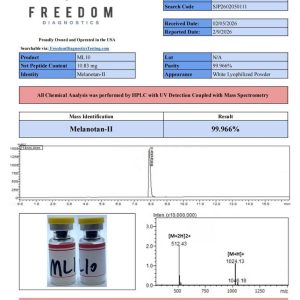
Melanotan 2 Peptide
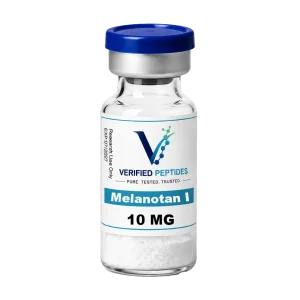
Melanotan 2 peptide is a synthetic compound, which is an analog of the α-melanocyte-stimulating hormone.(1) The peptide is a cyclic heptapeptide that appears to have a modified affinity towards the receptors that the endogenous hormone may interact with. In addition to possibly stimulating melanogenesis (the production of melanin pigment) in dermal cells, this peptide may have increased affinity towards other receptors that play a role in the regulation of appetite and various types of arousal.(2)
Overview
Melanotan 2 likely serves as a non-selective agonist with the potential to bind with four out of the five different subtypes of melanocortin receptors (MC-R).(3) Depending on the localization, the receptor-Melanotan 2 bond may induce different actions. Namely, the four receptors that Melanotan 2 may interact with include:
- The melanocortin 1 receptor (MC1R) may be expressed in melanocytes, which are cells found in tissues such as dermal tissues, hair, and possibly cells and tissues found in the eye.
- The melanocortin 3 receptor (MC3R) might be found in a range of tissues, potentially including the brain and the placenta. Initial observations suggest that MC3R might be involved in modulating appetite under certain experimental conditions.
- The melanocortin 4 receptor (MC4R) may be localized within the central nervous system, perhaps in the hypothalamus. Some early indications suggest that this receptor may impact neurons that are believed to have some influence over mating behaviors and general arousal.
- The melanocortin 5 receptor (MC5R) appears to be distributed across multiple tissues, although what role it might serve remains unclear.
For example, the potential interaction between Melanotan 2 and the MC1Rs may lead to increased production of eumelanin, which causes darkening of the epidermal layer’s pigment.(4)
On the other hand, when Melanotan 2 binds with the MC4R, it may induce supraspinal centers in the brain, which may lead to increased libido. These signals may then be carried to the sympathetic and parasympathetic centers in the spinal cord and thoracolumbar region.(3)
Chemical Makeup
Other Known Titles: MT-II
Molecular Weight: 1024.19 g/mol
Molecular Formula: C50H69N15O9
Research and Clinical Studies
Melanotan 2 Peptide and Nerve Cell Regeneration
Research(5) in a murine model of an induced peripheral nerve injury has been employed to investigate the neurotrophic potential of Melanotan 2. 48 hours after half of the murine models were presented with the peptide, it was noted that the Melanotan 2 research models appeared to indicate a recovery in their sensory function. Furthermore, when the murine models were presented with a chemotherapeutic compound, Melanotan 2 appeared to exhibit neuroprotective properties, which protected the nerves from the compound’s induced neurotoxicity to a certain extent. This potential is posited to be mediated via the MC4 receptors, which might even promote neurite outgrowth and possibly support the intrinsic capacity of neuronal tissue to recover after injury.
Although the exact signaling pathways are not fully understood, it is often suggested that the pro-opiomelanocortin (POMC)-derived melanocortin peptides, including compounds analogous to a-melanocyte-stimulating hormone (a-MSH), may influence neuronal structures by increasing the number and length of neurites and potentially promoting nerve sprouting in damaged regions. Since Melanotan 2 is considered a potent melanocortin receptor agonist, it may trigger a cascade of intracellular events that theoretically lead to a better-supported ability of nerve fibers to regenerate after various forms of insult, as well as a partial protective response against toxic neuropathic conditions. Therefore, the researchers concluded that they “observed that Melanotan-II also possesses neuroprotective properties, as it partially protected the nerve from a toxic neuropathy induced by cisplatin.”
| Specification | 10mg*10vials |
|---|
Be the first to review “Melanotan 2”
Related products
Szjpbiotech
Szjpbiotech
Szjpbiotech

Szjpbiotech
Szjpbiotech
Szjpbiotech
Szjpbiotech

Szjpbiotech
Reviews
There are no reviews yet.