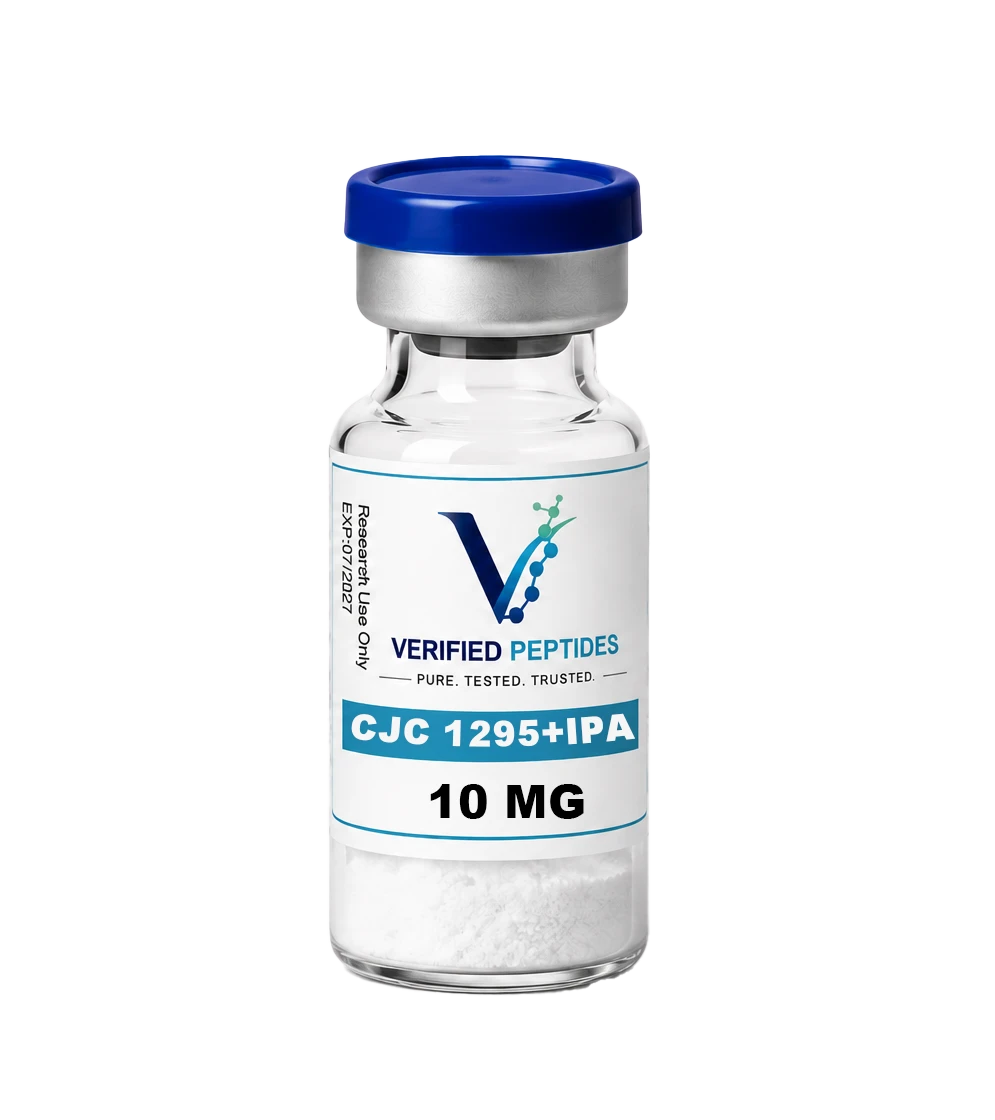
CJC-1295 & Ipamorelin Peptide Blend
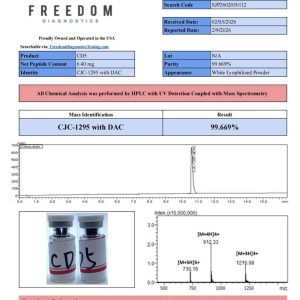
Ipamorelin and CJC-1295 are both considered to be growth hormone secretagogues. Ipamorelin is a synthetic pentapeptide,(1) and CJC-1295 peptide consists of 29 amino acids.(2) Ipamorelin appears to fall into a category of peptides classified as growth hormone secretagogues (GHSs). These are peptides that are assumed to stimulate the release of the growth hormones, however are not considered growth hormone releasing peptides themselves. On the other hand, CJC-1295 has also been suggested by researchers to stimulate the release of growth hormone, primarily by mimicking the actions of the naturally occurring growth hormone-releasing hormone (GHRH). Both Ipamorelin and CJC-1295 peptides have been assigned by researchers to this class, studied for similar potential actions and apparently differing only in terms of their half-life and pharmacokinetic profiles.
Overview
CJC-1295 & Ipamorelin peptides both are suggested by researchers to augment the levels of the growth hormones through a possible triggering of the anterior pituitary gland. Scientists consider that once triggered, growth hormones may be naturally secreted, maintaining levels of growth hormones in the organism.(3)
CJC-1295 peptide is a tetrasubstituted version of GHRH 1-29, developed to represent the shortest functional sequence of GHRH. GHRH 1-29 consists of the first 29 amino acids of the native GHRH peptide, and may potentially stimulate growth hormone production in pituitary gland cells, called somatotrophs. The peptide has four amino acid substitutions in its structure, which scientists suggest may enhance its activity and resistance towards proteolytic enzymes. More specifically, the amino acids which are replaced appear to be the 2nd, 8th, 15th, and 27th amino acids. Owing to these substitutions, the peptide might be able to bind covalently to blood albumin, with trace amounts possibly able to bind to fibrinogen and immunoglobulin G (IgG). As a result, the apparent half-life of the peptide may increase from 10 mins to 30 mins.(4) This may lead to elevated levels of plasma growth hormone and insulin-like growth factor 1 (IGF-1).
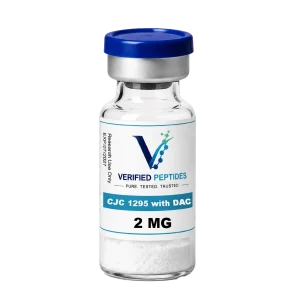
CJC-1295 might also be linked with the purported drug affinity complex (DAC) element, which may attach to plasma proteins. In particular, the DAC element in CJC-1295 alludes to the connection of N-epsilon-3-maleimidopropionamide derivative of lysine at the C-terminal end. Merging the tetrasubstituted amino acid chain and the DAC element, CJC-1295 appears to display enhanced pharmacokinetics yet retains a comparable attraction to the GHRH receptors in the pituitary gland, similar to natural GHRH.(5) More specifically, researchers comment that when the peptide was “selected for further pharmacokinetic evaluation, where it was found to be present in plasma beyond 72 h.”
Ipamorelin is a man-made pentapeptide, also known as NNC 26-0161, that is believed to associate with a specific receptor in the pituitary gland cells, termed the growth hormone secretagogue receptor (GHS-R1a). These receptors are considered to be located in the hypothalamus. Moreover, GHS-R1a is often referred to as the ghrelin receptors because ghrelin seems to be its primary natural ligand. Ipamorelin appears to stand out from other GHSs as a potentially more selective compound, which may possibly stimulate the release of GH levels by somatotroph cells without also increasing other hormones produced by the anterior pituitary gland, such as prolactin.
When the peptide blend, sometimes also called the peptide stack, is presented in combination, research studies typically report that the Ipamorelin exerts initial action, exhibiting some sign of impact within the first two hours of presentation, and as it starts to wean off, the CJC-1295 peptide may gradually supplement action.(6)
Chemical Makeup
Molecular Formula:
- CJC-1295: C152H252N44O42
- Ipamorelin: C38H49N9O5
Molecular Weight:
- CJC-1295: 3367.9 g/mol
- Ipamorelin: 711.8 g/mol
Other Known Titles
- CJC-1295: CJC-1295 NO DAC; Mod GRF 1-29
- Ipamorelin: NNC 26-0161
Research and Clinical Studies
CJC-1295 & Ipamorelin Blend and Half Life Determination
Clinical studies have been conducted on test subjects to determine the half life of and individual pharmacokinetic profiles of the two peptides. In one late 1990s study,(6) a clinical trial was conducted on eight male test subjects with a concentration escalation design. The level of growth hormones was monitored after every instance of peptide presentation. At the end of the study, it was suggested by the researchers that there was a single episode of growth hormone release with the highest peak at 0.67 hours, after which there was an exponential decline up to negligible concentrations of the compound. This study concluded that the Ipamorelin peptide appeared to exhibit a short half-life of 2 hours, after which the potential action appears to begin to decline.
CJC-1295, by contrast, appears to have a much longer half-life. Researchers comment that a single introduction of the peptide may upregulate growth hormone production by somatotrophs for prolonged periods of time, thus apparently contributing “to an overall increase in [growth hormone] secretion … by 46%” and also potentially upregulating its main anabolic mediator insulin-like growth factor-1 (IGF-1) by 45% on average.(7) Another publication also observes that CJC-1295 may potentially upregulate “[growth hormone] concentrations by 2- to 10-fold,” and estimates that the half-life of the peptide ranges between 5.8 – 8.1 days.(8)
| Specification | 10mg*10vials |
|---|
Be the first to review “CJC-1295 & Ipamorelin”
Related products

Szjpbiotech

Szjpbiotech
Szjpbiotech
Szjpbiotech
Szjpbiotech
Szjpbiotech
Szjpbiotech
Szjpbiotech
Reviews
There are no reviews yet.