
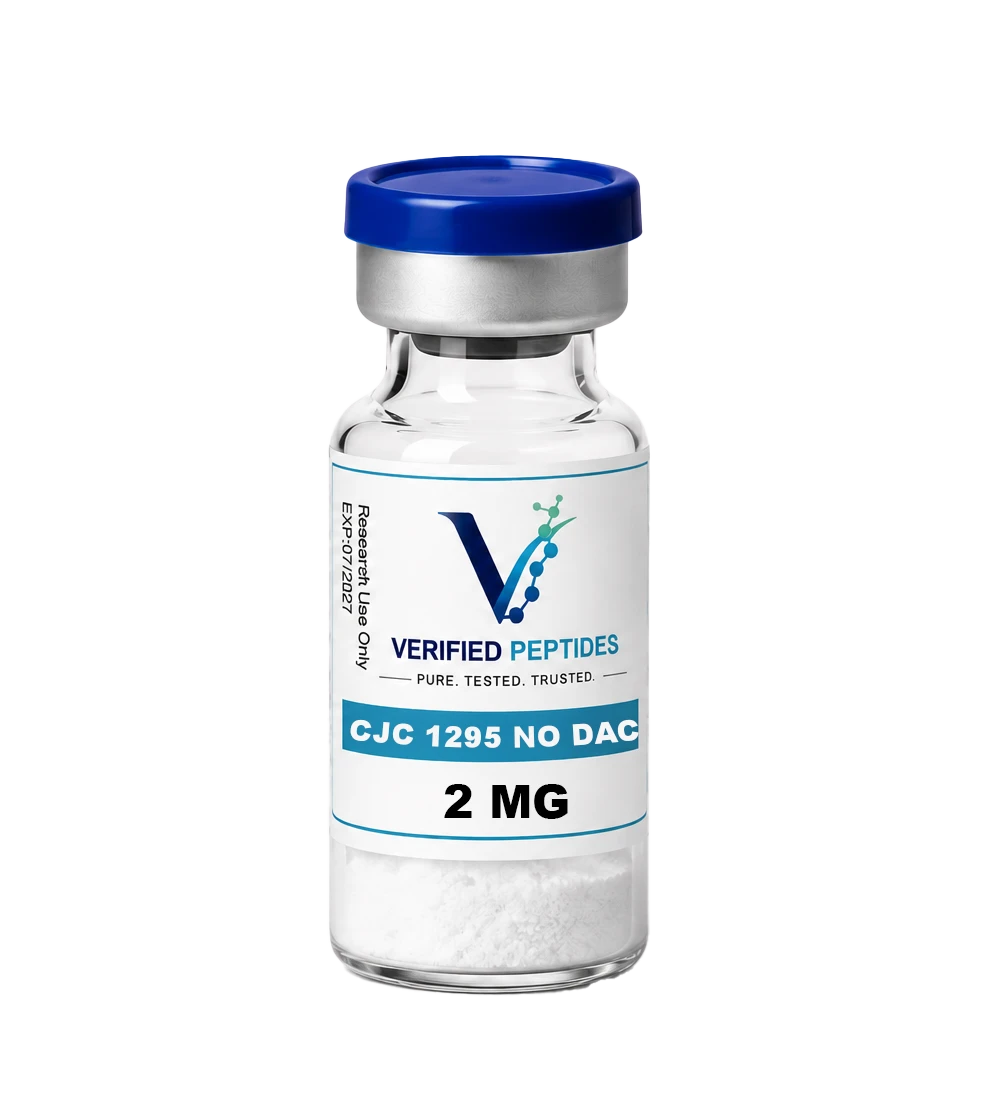
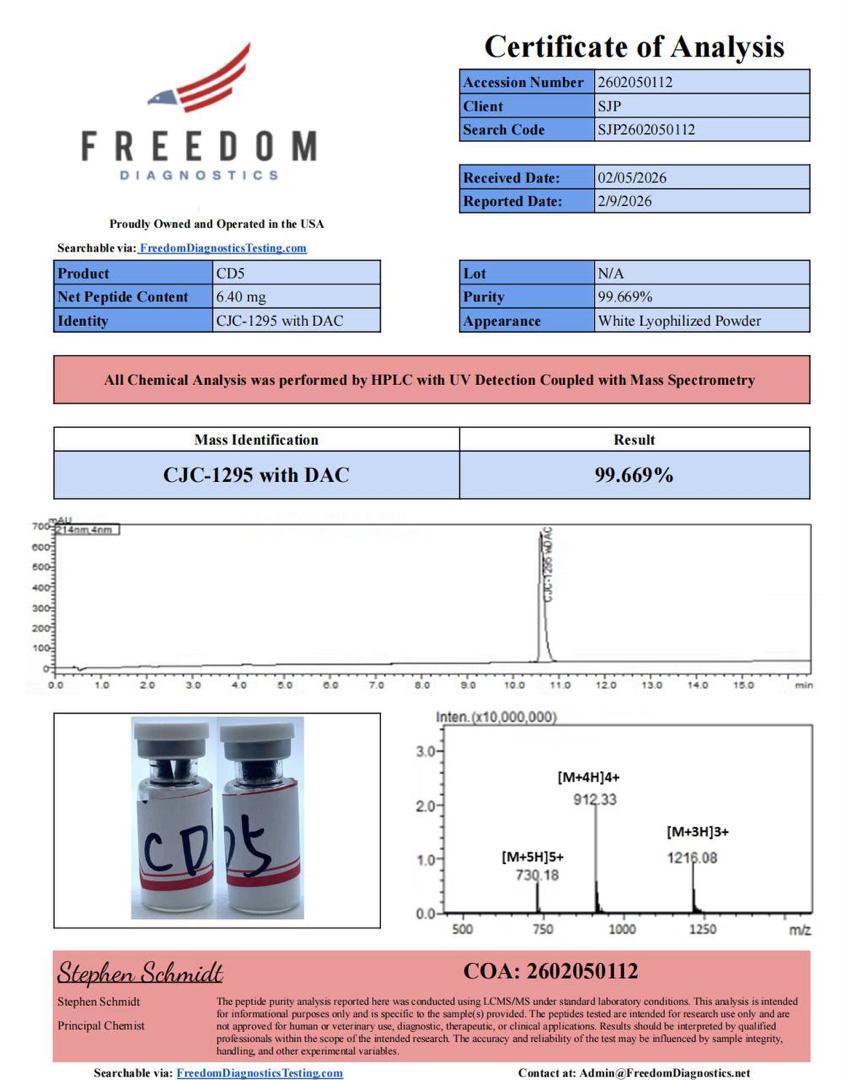
CJC-1295 Peptide (No DAC)
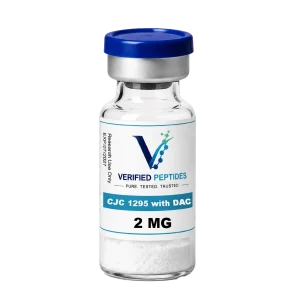
CJC-1295 is a synthetic peptide derivative of the naturally occurring GHRH hormone and is composed of 29 amino acids.(2) This peptide is also referred to as Modified GRF (1-29) or CJC 1295 without DAC. It is a modified version of the peptide containing four substituted amino groups that are considered to help prevent the peptide’s degradation. CJC without DAC does not have a Drug Affinity Complex that is sometimes added to further extend the half-life of the peptide.
Modified growth hormone fragments GRF (1-29) were first discovered in the early 1980s, when it was suggested that the first 29 amino acids of the natural growth hormone-releasing hormone might retain all the properties of the full 44 amino acid peptide.(3) One of the potential drawbacks of synthetically developed growth hormone-releasing peptides is a short half-life. Rigorous research has resulted in a supposedly stabilized, longer-lasting CJC-1295 (No DAC) peptide.(1)
Overview
CJC-1295 without DAC, alternatively known as the tetra-substituted GRF (1-29), represents a synthetic variant of the naturally occurring hormone responsible for the release of growth hormone (GHRH). Scholars have posited that it facilitates the secretion of growth hormone (GH). This compound is essentially constructed from the minimal sequence of amino acids that might bind to GHRH receptors, specifically the initial 29 amino acids of GHRH. There are notable structural differences between CJC-1295 without DAC and the unmodified fragment, primarily due to the alteration of four amino acids within the original 29 amino acids of GHRH. These changes encompass the 2nd, 8th, 15th, and 27th amino acids, and such adjustments might arguably extend the peptide’s lifespan against enzymatic breakdown, particularly by enzymes like dipeptidyl peptidase-4 (DPP-4).(4)
More specifically, these alterations include:
- The replacement of L-alanine with D-alanine at the 2nd position, which is thought to bolster resistance against molecular degradation.
- The substitution of asparagine with glutamine at the 8th position, which could conceivably minimize asparagine reconfiguration and amide hydrolysis.
- The exchange of glycine for alanine at the 15th position, which is speculated to enhance bioactivity.
- The alteration from methionine to leucine at the 27th position, which is suggested to prevent methionine oxidation.
Chemical Makeup
Molecular Formula: C152H252N44O42
Molecular Weight: 3367.9 g/mol
Other Known Titles: CJC-1295 Without DAC
Research and Clinical Studies
CJC-1295 (No DAC) Peptide and the Pituitary Gland
CJC-1295 without DAC seems to aim at the GHRH receptor on pituitary cells, potentially engaging with certain binding sites on the receptor molecule. This interaction may induce alterations in the receptor’s conformation, possibly sparking a chain of molecular events that might activate signaling pathways within its target cells. The induced structural changes are believed to facilitate the activation of G-proteins, signaling proteins theorized to reside on the cell’s interior side of the GHRH receptor.(5) Once activated, these G-proteins might trigger the production of secondary messengers like cAMP or IP3, which are thought to act as intermediary signaling molecules, possibly amplifying the signal inside the cell. Particularly, cAMP may activate protein kinases, which are presumed to be pivotal in phosphorylating specific target proteins.(6) Protein kinases are suggested to have a potential role in managing various cell functions. The stimulation of protein kinases could lead to the phosphorylation of transcription factors, proteins that might influence gene expression regulation. These phosphorylated transcription factors may then enter the nucleus and might alter the transcription of genes linked to the synthesis and secretion of growth hormone. Consequently, the molecular activities seemingly initiated by CJC-1295 no DAC’s binding may culminate in the merging of secretory vesicles loaded with growth hormone with the cell membrane. This merger may facilitate the external release of growth hormone from the pituitary cells, potentially enabling it to perform its biological functions.
| Specification | 10mg*10vials |
|---|
Be the first to review “CJC-1295 NO DAC”
Related products
Szjpbiotech
Szjpbiotech
Szjpbiotech
Szjpbiotech

Szjpbiotech

Szjpbiotech
Szjpbiotech

Szjpbiotech
Reviews
There are no reviews yet.